Donald Trump’s approach to Ukraine is prompting some longtime Republican voters in Pennsylvania’s Ukrainian American community to reconsider their allegiance before the 3 November midterm elections. Their discontent comes as the war with Iran and tariffs on imports create additional economic pressures for voters, putting the president’s foreign policy decisions under electoral scrutiny.
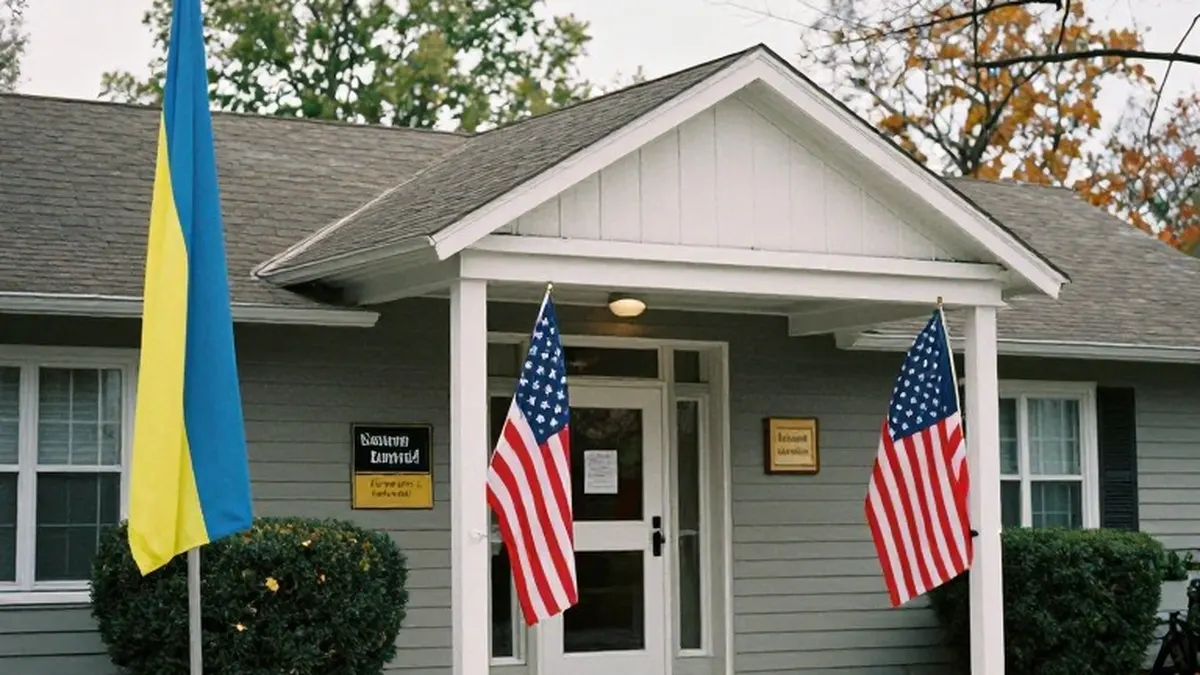
At the Ukrainian educational and cultural center in Jenkintown, outside Philadelphia, retired teacher Irene Skulsky urged fellow retirees to put support for Ukraine ahead of party loyalty. She said her son, Darko, narrowly escaped a Russian attack while driving to work in Kyiv, when strikes hit five cars directly ahead of him. Several occupants were killed, she said, although her son was unhurt.
Skulsky linked the absence of an advance warning to an alleged suspension of American intelligence sharing. The Trump administration has denied stopping that cooperation this month. Ukrainian president Volodymyr Zelenskyy, however, has said US intelligence networks provided no warning of two waves of Russian missile attacks. Trump’s administration has also faced accusations that it restricted the Ukrainian military’s access to Starlink satellite internet.
A deal Trump reached with Russian president Vladimir Putin to purchase nearly 5 million tonnes of diesel, overriding US sanctions, has deepened the anger. Trump has also urged Ukrainians to replace Zelenskyy. Eugene Luciw, a local representative of the Ukrainian Congress Committee of America, said the diesel agreement had driven away even committed Trump supporters in the community. His assessment was based on personal interactions, including on social media.
Pennsylvania has an estimated 105,000 to 122,000 residents claiming Ukrainian ancestry. About 60,000 people of Ukrainian descent live in metropolitan Philadelphia, the country’s second-largest such population after New York. Peter and Orysia Hewuka, longtime Republicans who previously voted for Trump, said Ukraine made them likely to support a local Democrat. Peter, an 88-year-old retired nuclear physicist, said: “The Republican party has left us, we haven’t left the Republican party.”
Beyond Ukraine, the economic consequences of the Iran war could influence voters concerned about living costs. Launched by the US and Israel in February, the conflict has continued despite Trump’s initial predictions of a brief campaign. Iran closed the strait of Hormuz in response to the attacks, disrupting a route that previously carried one-fifth of global energy supplies. Rising oil prices have increased American petrol and diesel costs.
Those pressures have added to the effects of tariffs, which have raised prices for consumer goods and imported manufacturing materials, including steel, copper and aluminum. Polling has consistently recorded dissatisfaction with Trump’s handling of the Iran war, the economy and inflation. A recent AP-Norc survey put criticism at roughly 70% for both his war handling and his management of the economy and inflation.
Trade tensions have also produced dissent among Republican candidates. After US-Canadian negotiations collapsed in August, Washington imposed tariffs on $20 billion of Canadian imports, prompting retaliation from prime minister Mark Carney’s government. In Michigan, Republican Senate candidate Mike Rogers called for an end to the dispute in an advertisement, declaring: “Canada is not our enemy.”
For some Ukrainian American voters, the recent decisions represent a decisive break. Mykola Hryckowian, director of the Center for US-Ukrainian Relations, said he had voted for Trump three times and participated in Ukrainian Americans for Trump. He now says he could no longer vote for him, while previously staunch supporters among his colleagues have also turned against the president’s Ukraine policy.