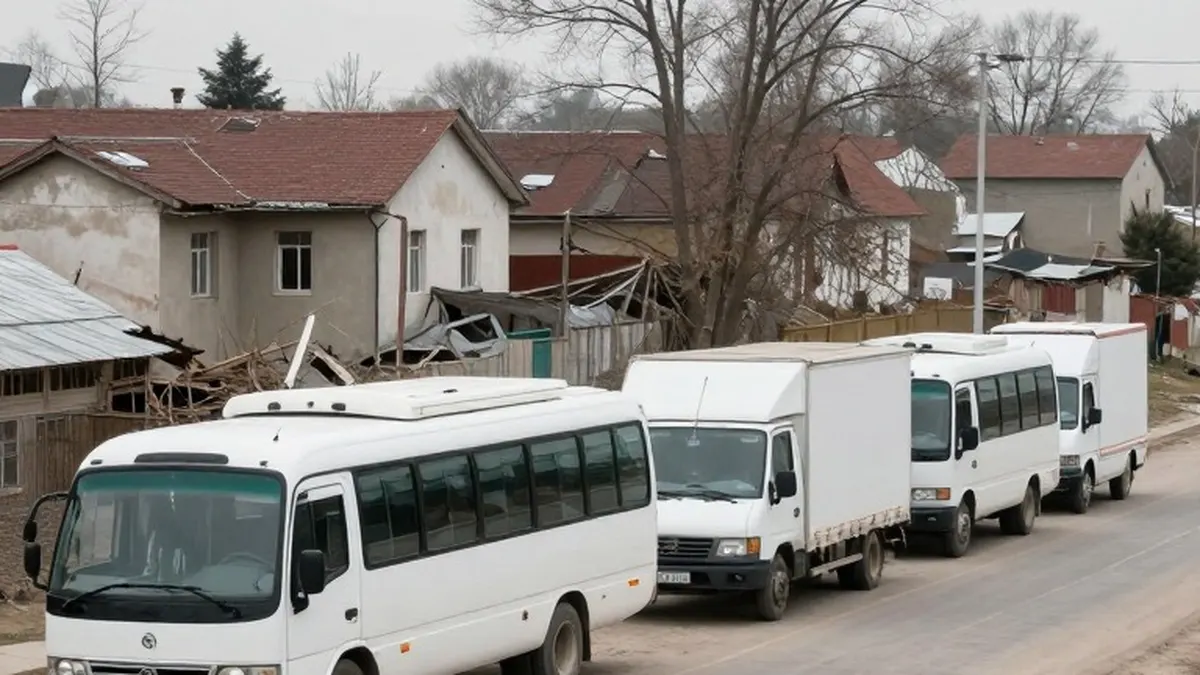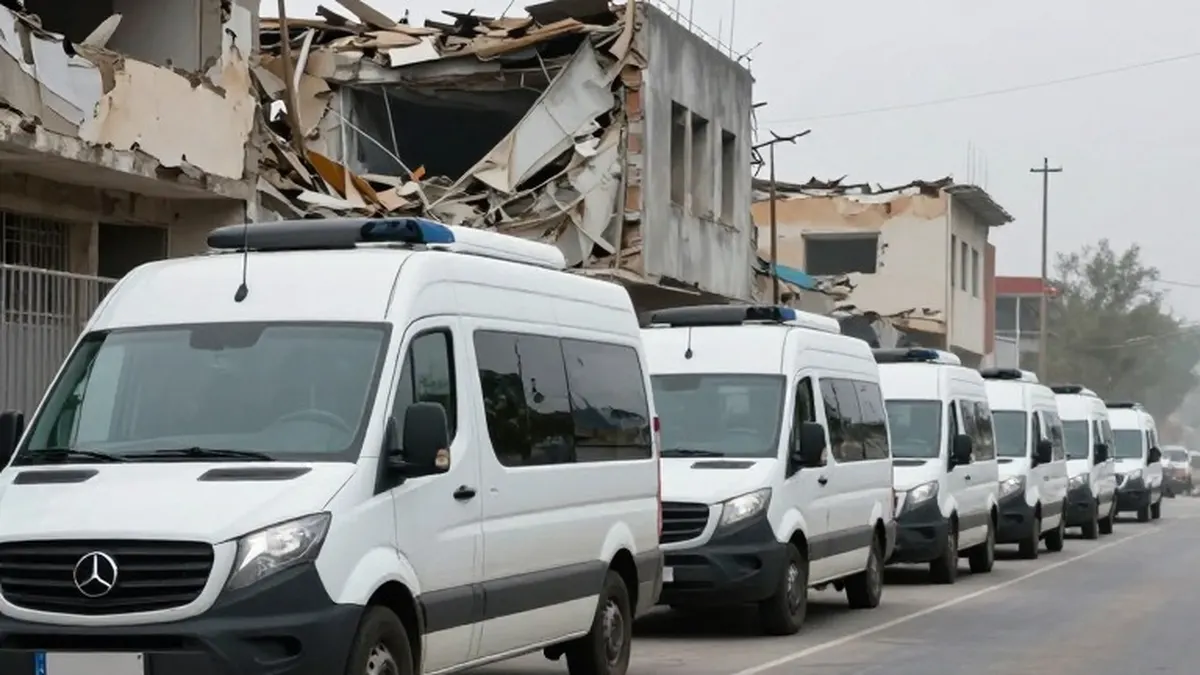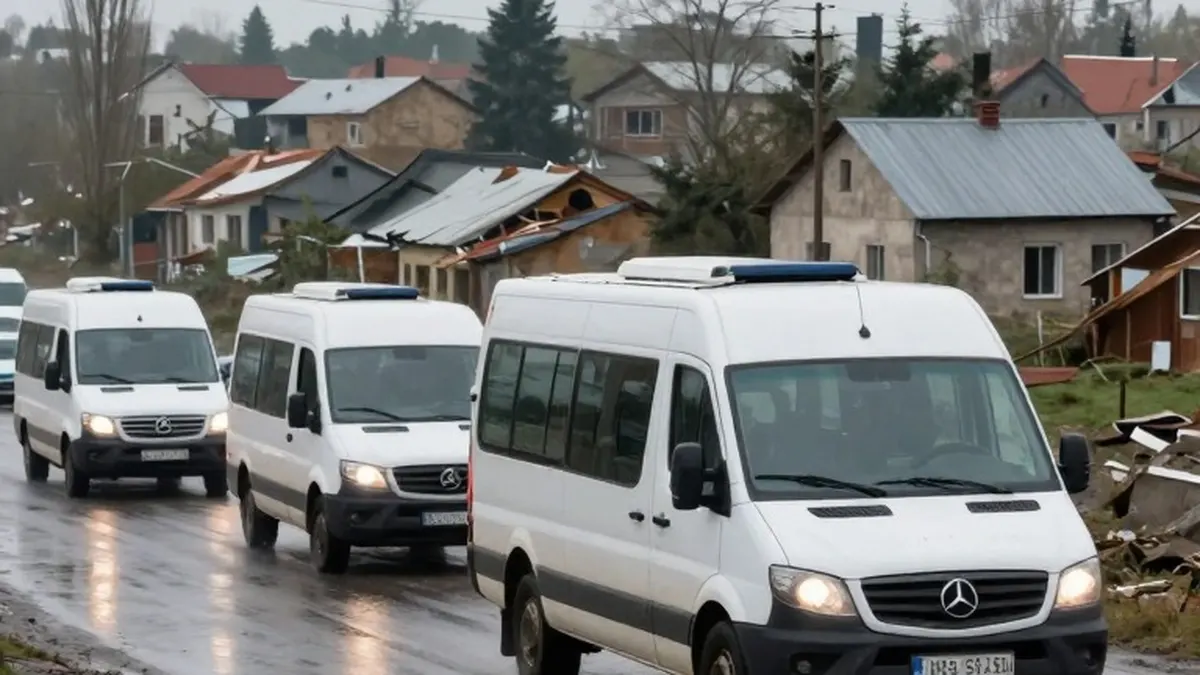
Civilians began leaving the besieged city of Oleshky in southern Ukraine on Friday, 30 October, during a joint relief operation described as the first of its kind in four years and eight months of war. A convoy of 25 buses and ambulances brought food and medical supplies to the Russian-held city and offered evacuation to residents wishing to go to Russia or Ukraine.
A local ceasefire in the Kherson region enabled crews to clear mines from roads leading out of Oleshky. The city stands across the Dnipro River from Kherson and has endured months of acute shortages of food and medicine. Warnings of starvation have been raised for those still living there, including about 50 children. Authorities and volunteers estimate that its population has fallen to roughly 2,000 since the war began.
Despite Ukrainian territory being only 3 miles, or 5km, away, those heading there face a lengthy journey through Russia and Belarus. Davyd Arakhamia, a lawmaker from President Volodymyr Zelenskyy’s Servant of the People party who joined the delegation, confirmed that some evacuees were travelling to the southern Russian city of Anapa. They would then fly to Belarus and continue by bus, crossing into Ukraine’s Chernihiv region.
The number evacuated remained uncertain, although earlier reports indicated that more than 500 people wanted to reach Ukrainian territory. Kyiv’s delegation arrived late on Friday morning to make preparations. Social media footage showed residents waiting in heavy rain, some in tears as they embraced delegation members. Several hundred residents, most of them older people, had decided to remain.
Accounts from people in Oleshky describe dangerous journeys along roads scattered with mines to obtain food and water. Some residents said their daily meals amounted to a cup of rice or buckwheat, occasionally supplemented with vegetables or wild plants. Footage also captured the preparations to leave, including a woman identifying herself as Anna who said she and her son had places on separate buses bound for Ukraine.
Ksenia Arkhipova, a volunteer and former Oleshky resident who maintains contact with people in the city, told the Associated Press that large numbers of Russian military personnel were present. She said troops were inspecting vacant homes and sometimes occupying them. She also alleged that residents were being pressured to evacuate to Russia instead of Ukraine.
US first lady Melania Trump claimed to have helped arrange the ceasefire that allowed the convoy through. The operation represented an unusual instance of cooperation between the two sides. The Kremlin nevertheless said on Friday that the circumstances were a special case that was difficult to apply to broader efforts to secure a peace settlement.
Ukraine’s human rights ombudsman, Dmytro Lubinets, coordinated the operation on the ground with his Russian counterpart, Yana Lantratova. Responding to concerns about people staying behind, he said efforts would be made to get humanitarian assistance through. He also described the ceasefire’s geographical reach and duration as unprecedented since 2022.
Russian forces captured Oleshky in the opening days of the full-scale invasion in February 2022. The city has sustained extensive destruction and suffered severe flooding following the destruction of the upstream Kakhovka dam in June 2023.