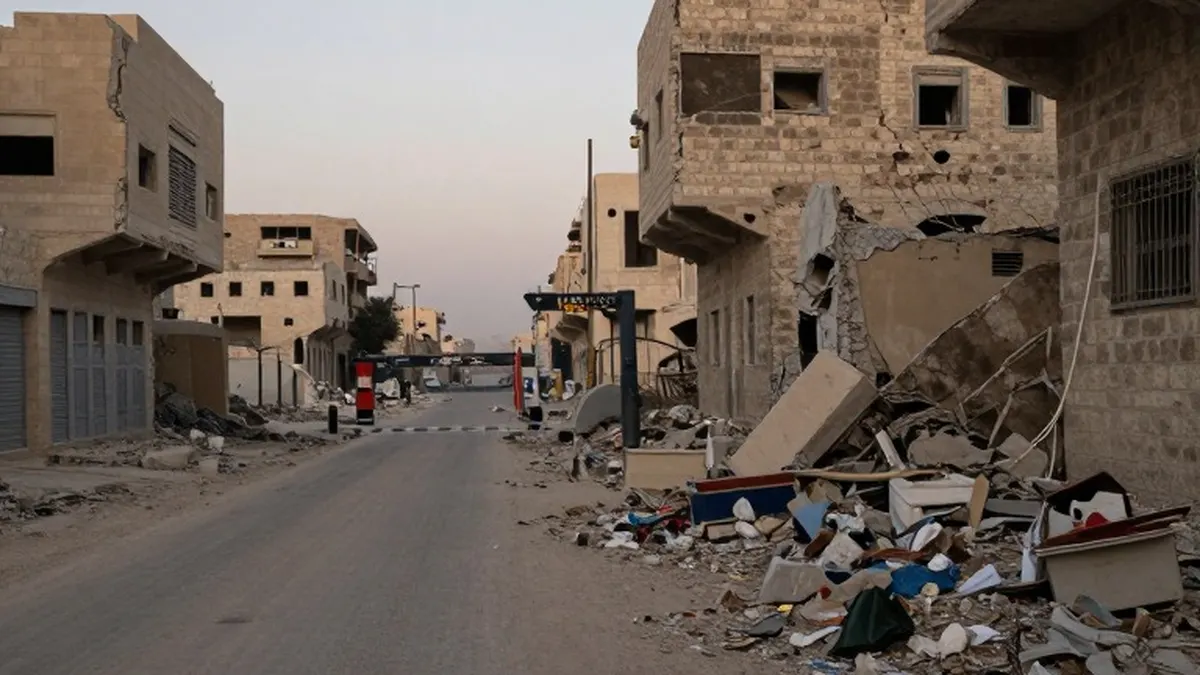
The governor of Taiz has accused Houthi forces of trying to drag Yemen's third city back to the stone age, using a briefing to press the international community to do far more to end the month-long siege.
Nabil Shamsan said massacres were under way in the city, that oxygen and water were running critically short, and that rubbish was accumulating in the streets because landfill sites were either full or unreachable. He put the city's minimum daily water requirement at about 35,000 cubic metres, yet said no more than 1,000 cubic metres a day was getting through, with water shipments halted at Houthi roadblocks ringing Taiz.
Food stocks have been exhausted and wheat prices have surged, leaving, in his words, "citizens are heading back to the stone age". Restaurants have shut because fuel has run out.
Shamsan said up to 1,800 people needing dialysis could not obtain supplies, 120 health centres had suspended operations, and school closures had disrupted the education of hundreds of thousands of children. Between August and 20 October, 64 people, including civilians, had been killed and another 173 injured, he said, while more than 6,400 newly displaced families, averaging seven members each, had arrived in the city to escape the fighting. "We are not talking about living, just surviving," he said.
His account directly contradicted that of the Houthi leader, Abdul-Malik Badr al-Din al-Houthi, who said: "The way is open for food, medicine, and humanitarian aid to enter the city and even for Saudi-backed groups to do so. Anyone who wants to verify that there is no siege on the city of Taiz can go to the city and see."
Shamsan insisted Houthi forces held a near-total grip on roads into the city and had presented the more than 800,000 people inside with a choice "either to leave or to die".
He also accused the Houthis of fighting not a military campaign but a struggle to reshape Yemen's identity, saying captured villages were being handed to new religious leaders while education and religious curricula were altered. "This is not a military war but a war of vengeance," he said, adding that residents of occupied areas were being made to declare loyalty to the Zaydi religion and sign forms confirming they had joined the Houthis. Scores of children from each village were being ordered to the frontlines in Saada and elsewhere without parental consent, he said.
Pledging that Taiz would resist to the end, Shamsan dismissed statements of solidarity as useless, saying what was needed was access for aid agencies, including the UN, to bring supplies in. He declined to detail the military situation but said shelling was intensifying, communications between the city and rural areas had collapsed, and the Houthis now controlled mobile networks, which he described as "completely disrupted", using them to message residents to abandon resistance while eavesdropping on calls. He noted he was speaking only 2 to 5km from the frontlines.
Most independent agencies agree conditions inside the city are deteriorating fast. Niku Jafarnia, a Yemen researcher at Human Rights Watch, said: "Renewed efforts by the Houthis to cut off food, water, and medicine to Taiz show their utter disregard for civilian lives." She added: "Throughout the 12-year-long siege of Taiz, the Houthis have bombed, starved and denied humanitarian aid to a million residents of the city with scant adherence to international law."