President Donald Trump stated on Thursday that the world will know his decision soon regarding whether to negotiate a deal to end the war with Iran or to order new military strikes. The president suggested that further action might be necessary to prevent future conflicts, noting that he believes it would take Iran approximately 25 years to rebuild from the damage already inflicted. While he expressed a preference to avoid destroying what remains of the country, he warned that he may have to do so if necessary.
Diplomatic efforts to de-escalate tensions intensified this week, with Trump holding a phone call with Qatari Emir Sheikh Tamim bin Hamad Al Thani. The Qatari leader's office confirmed the discussion focused on regional developments and the importance of continuing dialogue to prevent further escalation. Simultaneously, Iran's top diplomat engaged in a series of calls with counterparts across the Persian Gulf. These conversations were described as part of broader efforts to maintain stability in the region amid concerns that the United States might launch major new attacks.
Energy markets have responded to the shifting geopolitical landscape, with global oil prices rising slightly after a recent drop. Analysts predict that U.S. gas prices could fall below four dollars per gallon for the first time since July. Patrick De Haan, a petroleum analyst at GasBuddy, told CBS News that the national average, which stood at four dollars and six cents per gallon on Thursday, is expected to dip below the four dollar threshold by next week. He also forecasted that diesel prices could drop below six dollars per gallon by Thanksgiving, a trend he attributed to market optimism that the midterms would pressure the administration to seek a deal.
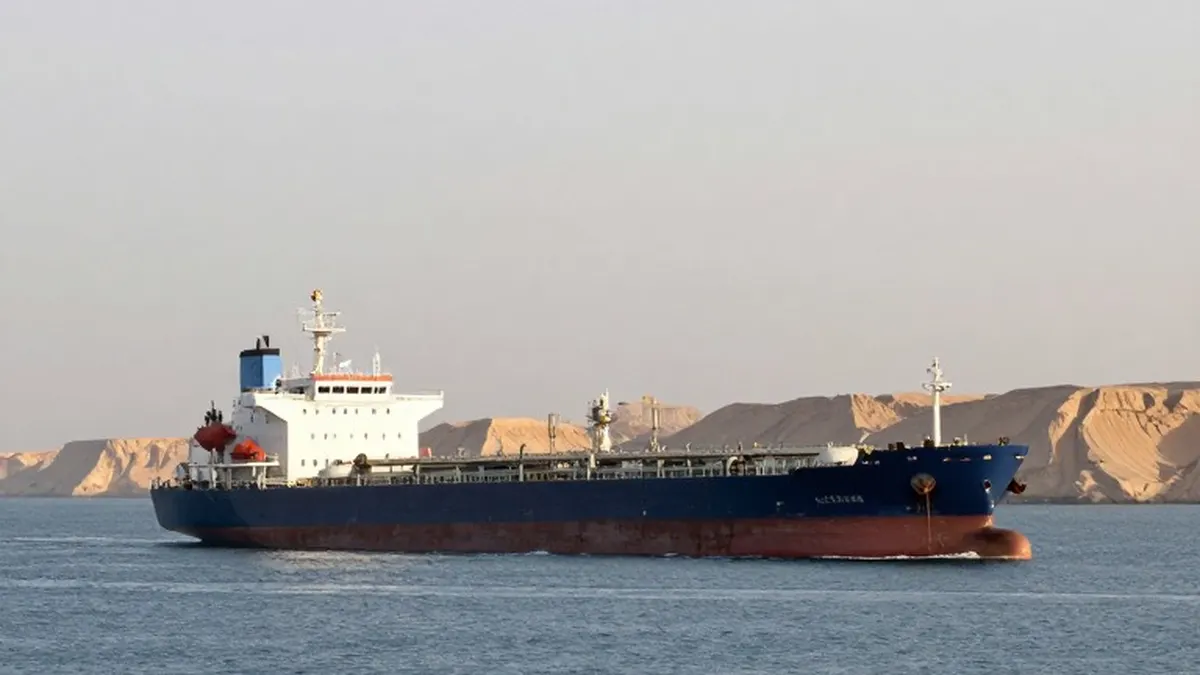
Tensions in the Persian Gulf remain high, with the United Kingdom Maritime Trade Operations center reporting that a tanker was hit by an explosion near the coast of Oman on Thursday. The ship's master reported an explosion at the waterline, but all crew members were safe, and the vessel continued its voyage under its own power. Iran's state media previously claimed that five oil tankers and a tugboat had caught fire in or near the Strait of Hormuz after striking sea mines. It remains unclear if the U.K. report was related to those specific incidents.
Iran's Islamic Revolutionary Guard Corps added to the claims on Friday, stating that two more oil tankers had hit mines and caught fire in the region. The IRGC alleged that the vessels had deactivated their navigation and identification systems while attempting to transit via an unauthorized route. President Trump has accused Iran of fabricating such incidents to drive up energy prices, though maritime officials noted a record high of at least 30 attacks on commercial vessels in the region during October alone.
In Yemen, the Saudi-led coalition announced it had intercepted a drone in the region of Mecca, Islam's holiest city. Coalition spokesman Turki al-Malki confirmed the interception on social media without providing further details. This incident follows repeated attacks by the Iran-backed Houthis on Saudi airports and energy infrastructure, which killed at least 20 people in October. The Houthis have consistently denied targeting Mecca or Medina, and they rejected a previous coalition claim that they fired a missile at the Medina region.
The Saudi coalition also reported that air defense systems intercepted two ballistic missiles launched by the Houthis at Najran, a major city in southwest Saudi Arabia. Debris fell as a result of the interception, and damage assessments are currently underway. These exchanges highlight the continued friction between the coalition and the rebel group since a truce broke down in July.
In a statement on international affairs, Aliakbar Velayati, an adviser to Iran's supreme leader, claimed that Iran is now one of the main architects of security in the Middle East. Velayati argued that the war has triggered a tsunami of geopolitical changes and that regional security is indivisible. He emphasized Iran's role as a bridge between the Persian Gulf, Central Asia, and the Caucasus, warning that any energy corridor seeking to bypass the country would be costly or unstable.
Meanwhile, Russian President Vladimir Putin met with Iranian security chief Mohsen Rezaei in Moscow to discuss strengthening bilateral ties. The two leaders discussed the potential construction of a gas pipeline from Russia to Iran. Rezaei described the meeting as an extremely important exchange, noting that the pipeline would help Iran address its natural gas shortages, which have been exacerbated by strikes on key infrastructure during the war. The aim is also to facilitate the sale of Russian gas to neighboring countries.
The conflict, which began in February with joint U.S. and Israeli strikes on Iran, has significantly impacted global energy supplies. The Strait of Hormuz, through which about a fifth of global crude oil typically passes, has seen increased military activity. The U.S. has escorted tankers through the strait to help restore shipments to near pre-war levels, while also maintaining a blockade on Iranian ports.