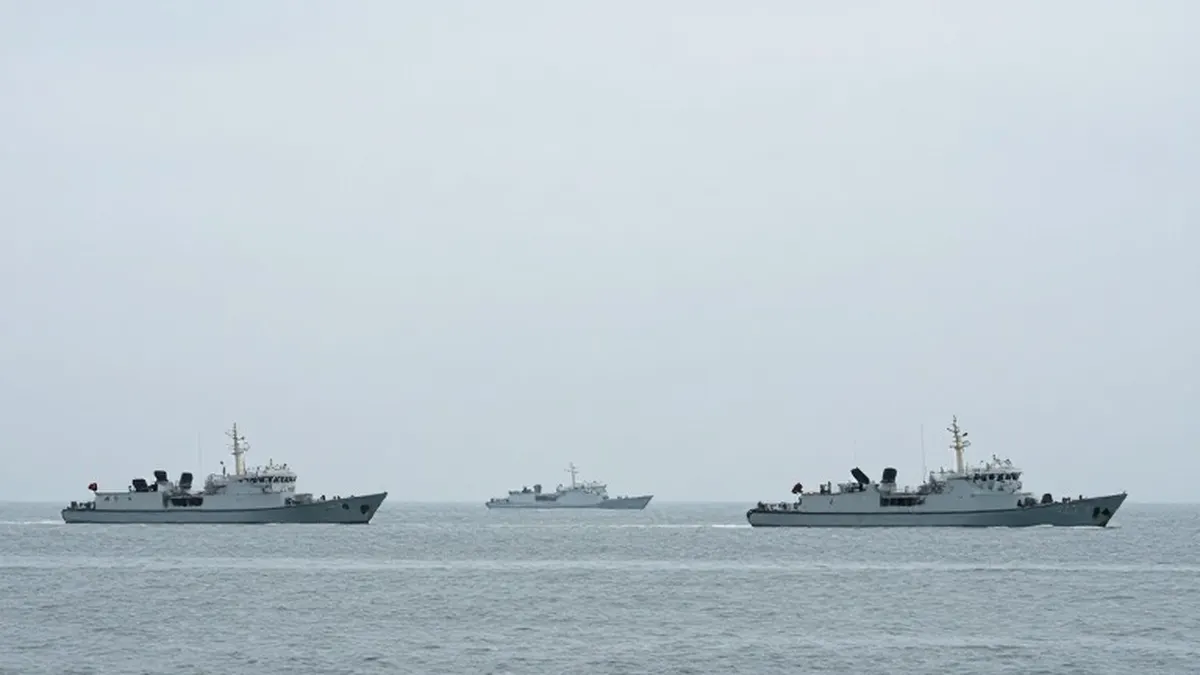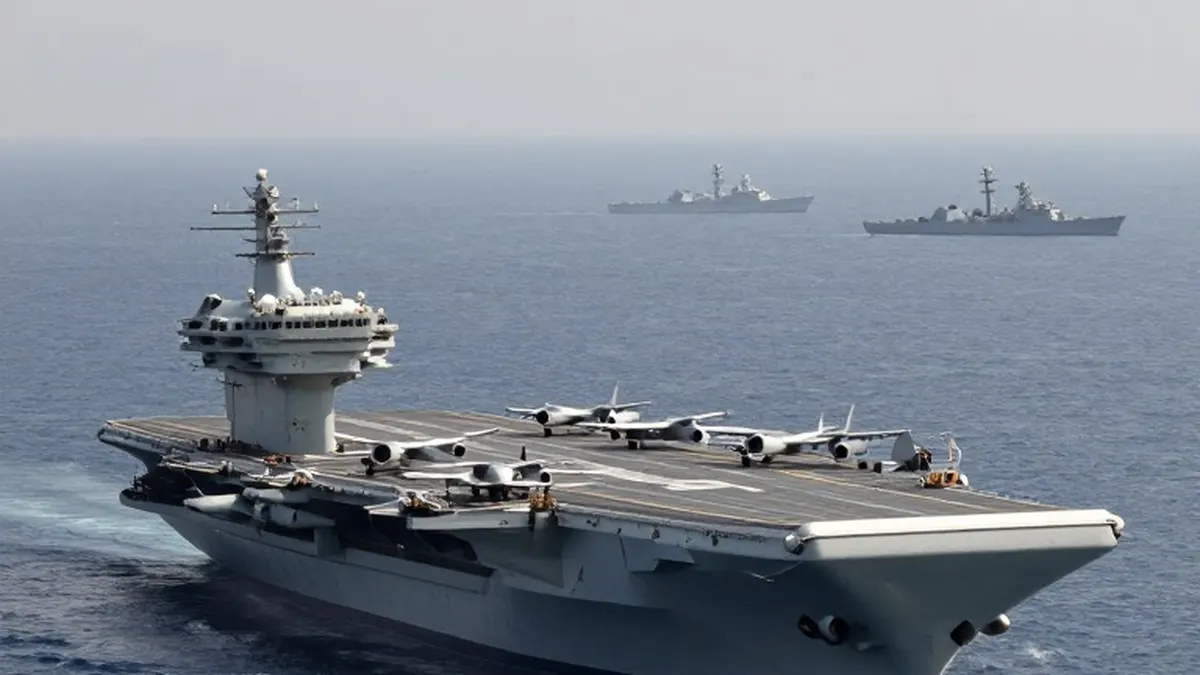
A third US aircraft carrier has reached the Middle East as the war with Iran enters its ninth month, while Tehran says its damaged nuclear facilities will remain closed to international inspectors until the conflict ends and its demands are satisfied. The deployment comes amid continued fighting and threats to shipping in the Strait of Hormuz, a major route for energy supplies.
The USS Theodore Roosevelt arrived on Sunday, according to a report by Axios and Channel 12 journalist Barak Ravid, who cited a US official. It joins the USS George H.W. Bush, USS George Washington and USS Boxer amphibious readiness group. The unusually large naval deployment includes more than 20,000 sailors and Marines and hundreds of aircraft. The Navy also had three carriers in the region in April, its first such deployment there since 2003.
US President Donald Trump has reportedly told senior advisers in recent days that he could refrain from attacking Iran if Tehran and the Iran-backed Houthis in Yemen avoid further provocations. Israeli Prime Minister Benjamin Netanyahu reportedly continues to favor US and Israeli strikes on Iran. Netanyahu lost his parliamentary majority in the October 27 election.
Iran’s Revolutionary Guards said Monday that mines had struck two oil tankers in the Strait of Hormuz, causing explosions, according to Iranian state media. The statement also said six tankers had caught fire in similar incidents on Sunday and Monday. Separately, UK Marine Trade Operations reported that a vessel leaving the strait near Oman was struck by an unidentified projectile, setting its engine room ablaze.
Security monitor Vanguard identified that vessel as the Panama-flagged ON PHOENIX and placed the incident three nautical miles off Oman. Both Vanguard and UK Marine Trade Operations said everyone aboard was safe. The incidents added to the shipping threats in the waterway, which Iran has blockaded during the conflict.
On nuclear inspections, Deputy Foreign Minister Kazem Gharibabadi said in a televised interview late Sunday that access would depend on Iran’s conditions being fulfilled and a permanent end to the war. His remarks followed an International Atomic Energy Agency appeal days earlier for Tehran to move toward restoring inspections. Gharibabadi suggested that inspecting the damaged sites was likely intended to evaluate the performance of US weapons.
Inspections have been suspended since last year’s 12-day war with Israel, during which the United States also attacked Iranian nuclear facilities. Those facilities were struck again in the current conflict, which began on February 28 with US-Israeli attacks that killed Iran’s supreme leader, Ayatollah Ali Khamenei. IAEA inspectors visited the Bushehr nuclear power plant in September, but other bombed sites, including Natanz, Fordow and Isfahan, remain inaccessible to them.
A confidential IAEA report seen by media outlets on Friday said Iran’s lack of cooperation prevented the agency from determining whether declared nuclear material had been diverted from peaceful activities. The watchdog also expressed growing concern over a uranium-enrichment plant at Isfahan. Iran disclosed the plant to the agency last year but has yet to permit an inspection.
Diplomatic efforts to end the war have achieved little progress. Iran wants Washington to lift sanctions and release frozen Iranian assets, among other demands, before it reopens the Strait of Hormuz. Iranian officials have said negotiations over the country’s nuclear program would follow at a later stage.