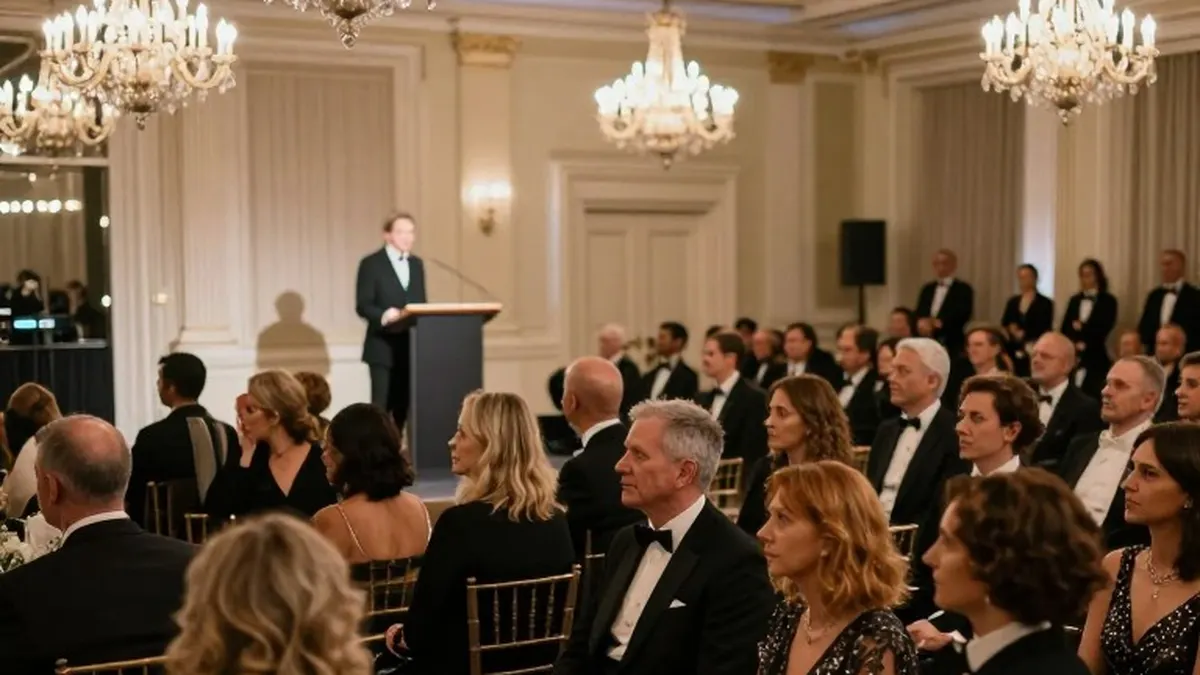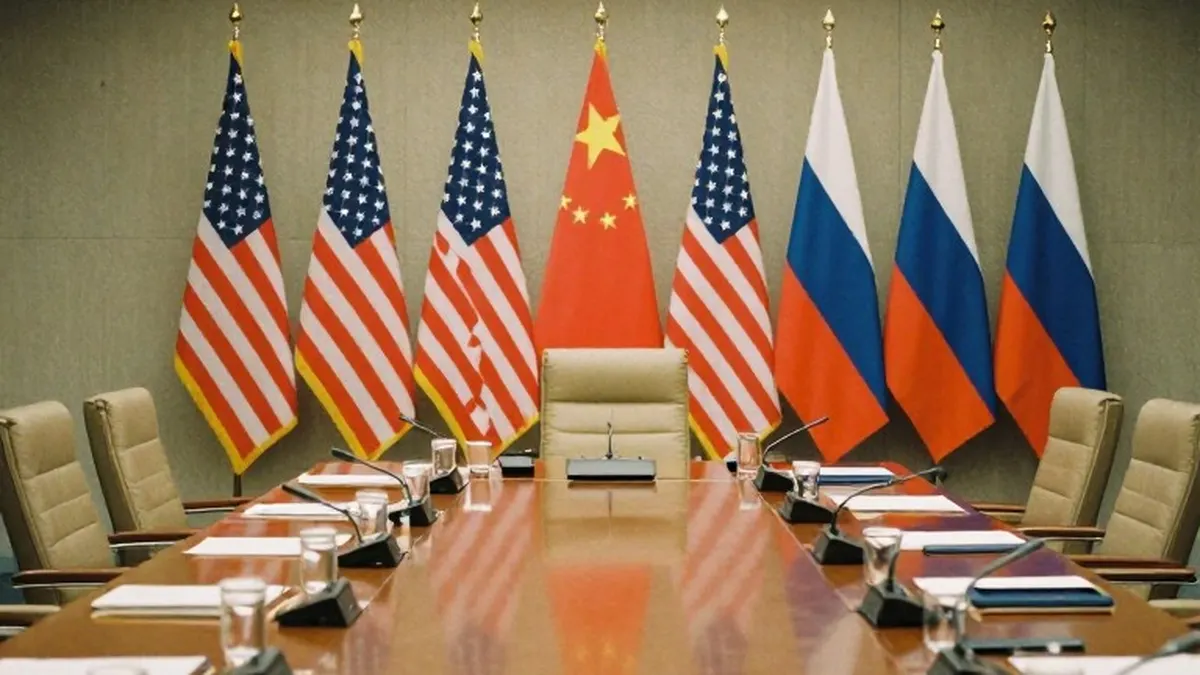
The White House has confirmed to The Jerusalem Post that US President Donald Trump will hold a trilateral summit with Chinese President Xi Jinping and Russian President Vladimir Putin during his upcoming visit to China. The war in Iran and the possibility of reducing the three countries' nuclear arsenals will be among the issues discussed.
The meeting is set to take place toward the end of Trump's visit to Shenzhen, following his scheduled bilateral meeting and working lunch with Xi on Thursday afternoon, November 19, though the White House did not give an exact date or time for the trilateral session. "The President has made it clear that, among other topics, he will discuss the reduction of nuclear weapons in the world, whose proliferation President Trump believes is very dangerous," White House Assistant Press Secretary Olivia Wales said.
Senior US officials cautioned during a briefing attended by the Post that the administration does not expect the first meeting to yield a nuclear arms control agreement, describing the summit instead as an entry point and a first conversation. While noting that Washington and Moscow have decades of arms control negotiating experience, one official suggested Beijing could be a more difficult participant, saying it was time for China to step up to the adults' table and accusing it of expanding its nuclear arsenal without sufficient transparency.
On the conflicts consuming the region, a senior US official confirmed that Trump intends to raise the war in Iran with Xi and Putin, but does not plan to discuss the war in Ukraine in the same forum. The official explained that Ukraine is being handled through a separate track involving recent meetings with Russia, in which China is not really a participant, and clarified that no separate bilateral meeting between Trump and Putin is scheduled during the visit.
The decision to put Iran before the three leaders comes amid renewed uncertainty over Washington's approach to Tehran. Trump said earlier this week that the United States no longer needed an agreement with Iran, and directed Vice President JD Vance, who had been involved in diplomatic contacts on the conflict, to focus on domestic corruption investigations. The president has continued to threaten additional military action against the Iranian regime even as his administration emphasizes economic pressure on Tehran. Officials offered no details on what Trump might propose to Moscow and Beijing, both of which maintain ties with Iran, or what role they might be asked to play in ending the war.
Wales also laid out a detailed itinerary for the trip, which begins early Monday morning, November 16. Trump will meet leaders of the Quad, the United States, Japan, India and Australia, in Manila on Tuesday evening to discuss security, prosperity and cooperation across the Indo-Pacific, and will take part in a special US-ASEAN summit. He will then meet the Philippine president at the presidential palace regarding commercial agreements and strategic investments in aviation, defense, energy and technology. On Thursday morning, November 19, he will join a multilateral meeting with APEC leaders before his bilateral session with Xi, which follows Trump's May visit to Beijing and Xi's September visit to Washington.
The White House also disclosed that Elon Musk, chief executive of Tesla and SpaceX, is expected to accompany Trump for portions of the China stop. A senior official cited Musk's extensive business interests in the US-China relationship and his role in sectors relevant to American national security, saying he could be valuable in an advisory capacity. Musk will not take part in the trilateral summit or the bilateral meeting with Xi, which the official said would be official meetings with officials only. The official downplayed the prospect of detailed discussions about Starlink and its role in the Ukraine war, and said no broader American business delegation is expected, though some executives may attend the China-hosted APEC CEO Summit at Beijing's invitation.
Officials also addressed the scandal surrounding former Nvidia CEO Jensen Huang, who resigned this week following revelations about extramarital relationships, including one involving a woman US intelligence officials reportedly suspect of working for Chinese intelligence, as well as reported relationships with company employees. The allegations have raised concerns about the possible exposure of sensitive American technology. The White House said the matter should not have any bearing on the talks with Xi, while confirming it is considering measures to strengthen existing restrictions on exports of advanced American AI chips.
Trade frictions are expected to feature heavily in the bilateral meeting with Xi. Senior officials said Washington remains frustrated with China's pace of supplying rare earth minerals and related products, which are critical to defense manufacturing and advanced electronics, and said those concerns contributed to the decision to extend the Busan agreement for only two months rather than six. Trump is expected to raise the issue directly with Xi, alongside concerns about Chinese non-tariff barriers. American and Chinese representatives met earlier on Friday to discuss implementation, but the White House does not expect to announce a new tariff agreement immediately after the summit.
Finally, officials ruled out any currently planned engagement with North Korean leader Kim Jong Un during the Asian tour, saying there are no plans at all for engagement with Pyongyang. The centerpiece of the trip will be the trilateral summit with Xi and Putin, an effort to open a new discussion on nuclear arms control among the three powers while the war in Iran continues and their wider strategic relationships remain under strain.