Ukrainian President Volodymyr Zelenskyy announced on Friday that speed restrictions on the US Starshield satellite communications system continue to affect the entire front line. These limitations are currently hampering the Ukrainian military's operational capacity within the country. The president noted in his nightly video address that the persistent throttling makes it difficult to intercept jet-powered drones and other aerial threats. He further argued that the situation sends an unfavorable signal to Russia regarding how the United States views the temporarily occupied territories.
Zelenskyy stated that he expects Ukraine's Ministry of Defence and Foreign Ministry to work closely with relevant US structures to resolve the issue. He emphasized that the speed restrictions limit the ability to counter Iranian-designed Shahed drones and other aerial targets. The president expressed the expectation that normal speeds will be restored. These comments followed reports on Thursday that Ukrainian military units had recorded disruptions to Starshield services over several days.
The current restrictions trace back to mid-October, when officials said Elon Musk's SpaceX abruptly capped the speed of Starlink and its military version, Starshield. This move occurred amid rising tensions between the US and Ukraine over Ukrainian attacks on Russian oil refineries. Service levels were reportedly restored on October 24, yet the president indicated that the speed limits remain in place along the front line and in occupied areas.
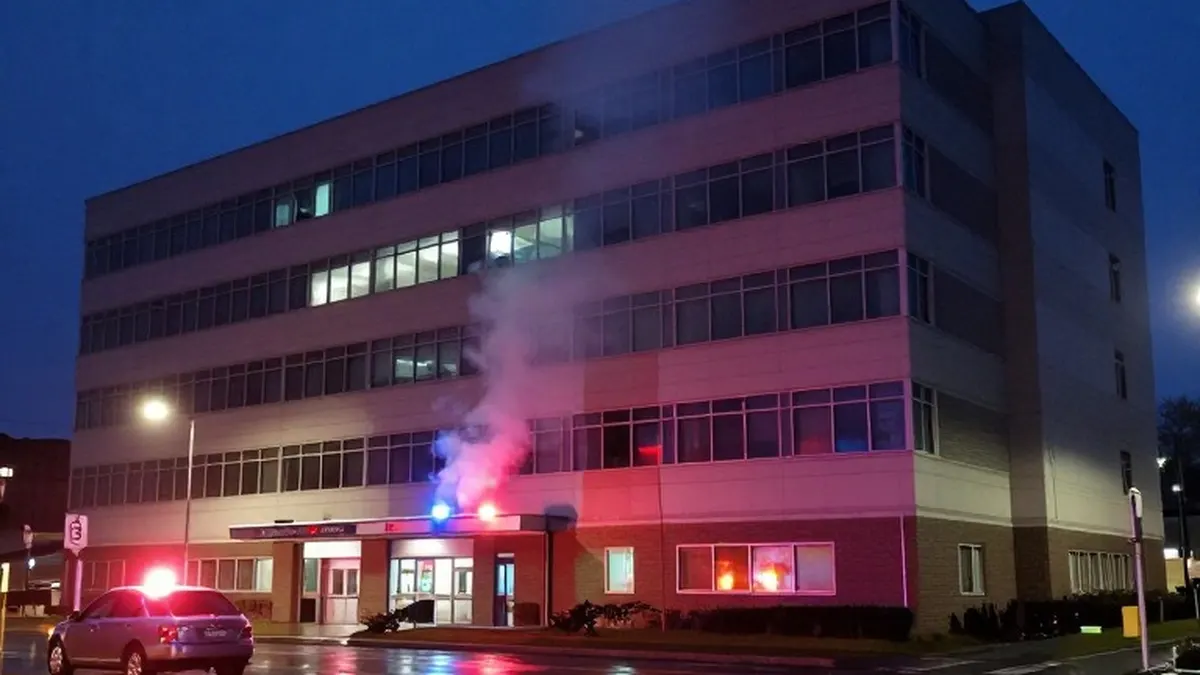
Shortly after Zelenskyy's remarks, Russian forces attacked a hospital in the center of Kyiv. The facility, the National Institute of Traumatology and Orthopedics, is located near several Western embassies. A drone struck the second floor of the hospital and an adjoining 19th-century building at 3 am. Three people were injured in the incident. Meanwhile, Russia claimed to have shot down nearly 1,200 Ukrainian drones overnight, describing it as one of the largest swarms sent by Kyiv. Russian authorities said at least four people were killed in the southern region of Volgograd.
In a separate development, EU foreign policy chief Kaja Kallas warned against falling into traps set by Russia. Speaking upon arrival at an EU leaders' summit in Dublin, Kallas stated that Moscow is attempting to start a debate about European security to divert attention from its aggression. She emphasized that there is one aggressor and one victim, and that the aggressor does not have security concerns. Russia has revived hardline demands for a total overhaul of European security in recent talks, demands that were previously rejected in 2021.
Russia experienced two significant car bomb attacks in the past 24 hours. On Friday morning, a car bomb exploded in southern Moscow, severely injuring Sergei Zavorotniy, a 72-year-old former senior aide to Ukraine's exiled former prime minister Mykola Azarov. This incident followed a similar explosion in St. Petersburg the previous day, which killed a senior Russian military official. While the victim in St. Petersburg has not been publicly identified, local broadcasters cited sources indicating the person was a colonel in the Russian air force. These attacks are part of a series of assassination attempts believed to be orchestrated by Kyiv.
Russian forces also launched strikes on two Ukrainian cities on Friday. In the southeastern city of Zaporizhzhia, a five-storey apartment building was hit and seriously damaged. One person was killed and more than 50 were injured. Regional governor Mykhailo Semikin reported that a rescue worker was killed when a concrete slab collapsed during rubble clearance operations. In the Black Sea port of Odesa, two people died in an attack on a private residence, and five others were injured, according to city military administration head Serhiy Lysak.
In a notable legal development, a general in Ukraine's SBU security service was released from pre-trial detention on Friday after posting 1.2 million dollars in bail. The officer, Serhiy Duka, was involved in a serious corruption case. Footage from the TSN.ua news site showed Duka proclaiming his innocence after leaving prison. He thanked his SBU colleagues for helping raise the bail money. Duka had been detained on November 4 as part of an anti-corruption operation targeting an alleged criminal group involving members of the SBU, the prosecutor's office, the police, and organized crime.