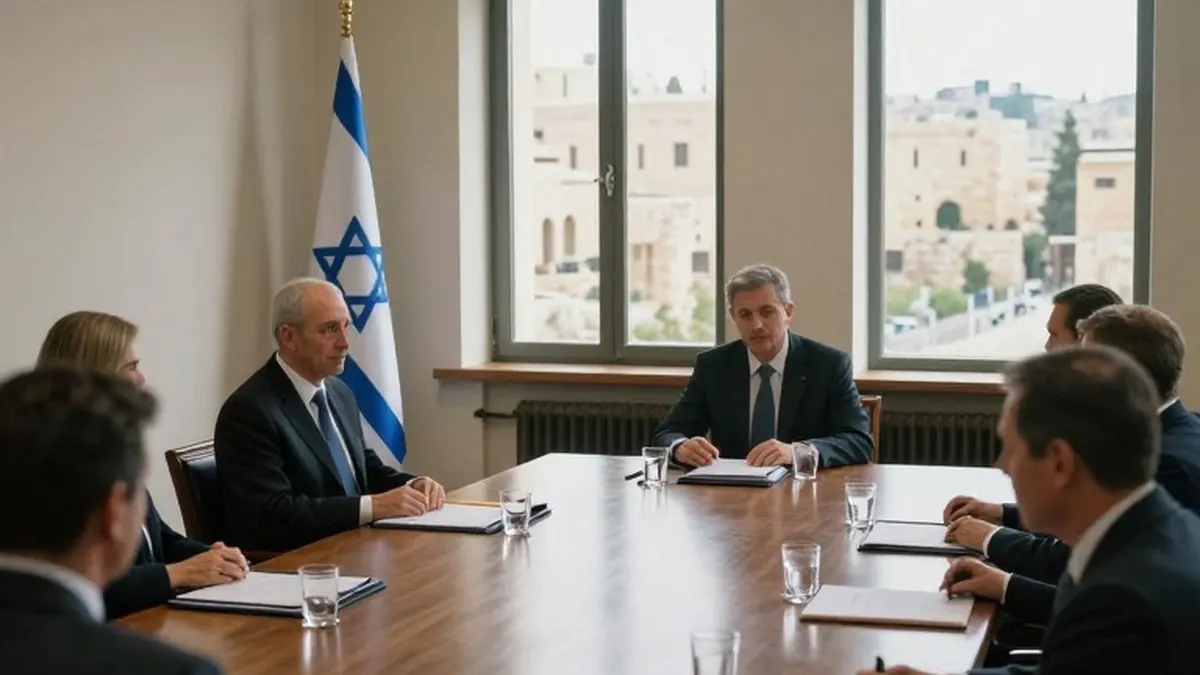
Israeli President Isaac Herzog called on the country's political leaders on Wednesday to approach coalition negotiations with open minds, warning that Israel must do all it can to avoid another round of elections. His remarks came a day after voters went to the polls to choose the 26th Knesset.
"One thing must be understood, and I said this even before the elections: We must do everything, certainly after yesterday, to avoid another round of elections," Herzog said. "Therefore, I expect everyone who comes here to arrive with an open mind." He was referring to the consultations expected to take place at the President's Residence.
Israeli presidents have a history of stepping into periods of political deadlock, and several have used their office to encourage party leaders to consider unity coalitions.
In 2019, following the election for the 22nd Knesset, then-president Reuven Rivlin lobbied Benjamin Netanyahu and Benny Gantz to form a unity government. He put forward a proposal for an equal government structure, along with changes to the arrangements covering incapacity and the role of acting prime minister, in an effort to break the impasse.
An earlier precedent dates to 1984, when Herzog's father, Chaim Herzog, served as Israel's sixth president. He later described using his position to press for a unity government between the Alignment party and Likud. "I had to try to bring together the different elements rather than allow the dynamics of events to lead to the development of a dangerous split," he wrote.
As the deadlock persisted, Chaim Herzog gave Shimon Peres additional time to form a government. When negotiations later stalled, he wrote that he "acted to establish a small negotiating team," which included representatives from Likud and the Labor Party.
Days after that step, a unity government led by Peres and Yitzhak Shamir was presented, built around a rotation agreement.