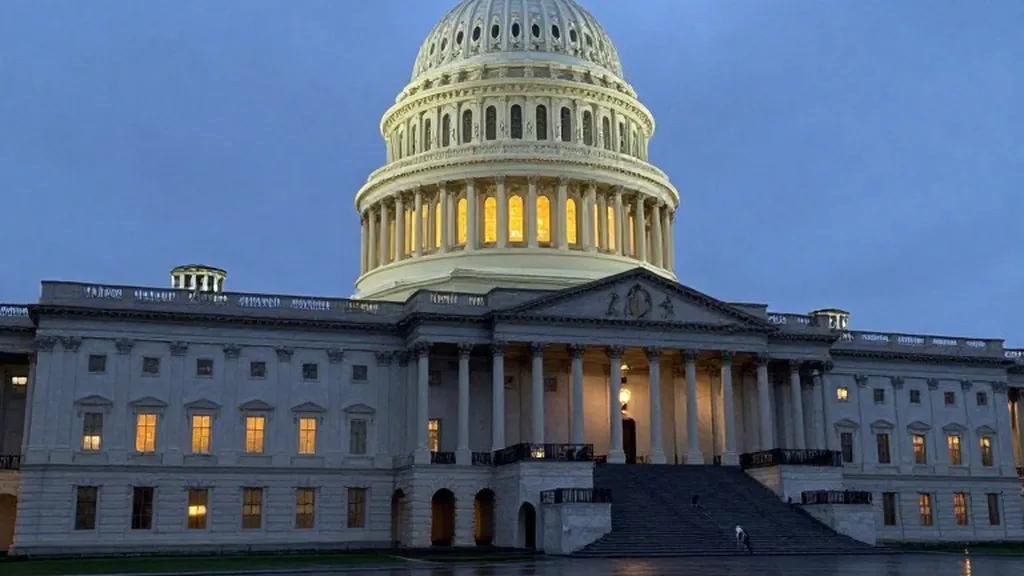
The 2026 midterm elections have concluded with a decisive shift in power in Washington. Democrats have won majorities in both the U.S. House and the U.S. Senate, marking a significant reversal of control from the previous two years. According to election results compiled by Ballotpedia, Democrats picked up at least 43 House seats and seven Senate seats. All seven of these Senate seats were previously held by Republicans. In the House, Democrats gained 42 seats from Republicans and one seat from an independent. This performance places the election in the top 20% of historical elections in terms of seat swings against the president's party, meeting the threshold for a wave election in the Senate.
With results reported as of 4 p.m. EST on November 6, the new balance of power is stark. Democrats will hold at least a 250-157 majority in the House of Representatives. In the Senate, they will control 54 seats compared to 44 for Republicans. While the House loss of 42 seats for Republicans is substantial, it falls short of the 48 seat loss required to qualify as a wave election by Ballotpedia standards, though uncalled races could still alter this total. In state-level races, Democrats won a plurality of government trifectas and state legislative chambers. They also secured a majority of governorships for the first time since before the 2010 elections. Trifecta status was determined in 44 of the 46 states as of the reporting deadline.
The immediate political focus has turned to the U.S. Department of Education, a primary target for the incoming Democratic leadership. Rep. Bobby Scott of Virginia, who is set to lead the House Committee on Education and the Workforce, announced plans to use the committee's investigative powers extensively. He stated he intends to leave no rock unturned in reviewing the Trump administration's dismantling of the department. The committee will explore the oversight of federal student loans and the administration's anti-discrimination policies. Scott sent a letter to 10 federal agencies the day after the election, reminding them to preserve records for potential congressional review.
Senate Democrats are also preparing to use their new power to push back against the administration's education agenda. Sen. Elizabeth Warren of Massachusetts called on her colleagues to hold the administration accountable for dismantling the Education Department. Sen. Chris Van Hollen of Maryland, a member of the Senate Appropriations Committee, indicated that Democrats will use budgeting powers to establish guardrails. He described this approach as a way to stop the bleeding in the department, even if it does not fully reverse the changes made. Some advocates are pushing for appropriations language that would order the administration to reverse decisions that moved Education Department functions to other agencies, such as the Department of Health and Human Services and the Justice Department.
White House officials have reacted to these plans with criticism. Education Department spokesperson Savannah Newhouse accused Democrats of plotting to prematurely sabotage Education Secretary Linda McMahon. White House spokesperson Liz Huston claimed that Democrats were failing American students with disastrous leadership before President Trump returned to office. Diana Autin, executive director of the SPAN Parent Advocacy Network, noted that while the new Congress is unlikely to pass the same legislation as the previous year, it may be difficult to undo the harm already done. She expressed hope that the new leadership would use its oversight role effectively.
A major point of contention in the House is the impeachment of Defense Secretary Pete Hegseth. Rep. Thomas Massie of Kentucky, a Republican, filed a resolution to force a vote on impeachment. Massie read the resolution from the House floor on Monday, just hours after the chamber opened for its first session following the midterms. The resolution cites Hegseth's role in military actions in Iran, Yemen, and Venezuela. Massie argued that Hegseth knowingly executed unlawful orders and remains a threat to the Constitution. He described these actions as high crimes and misdemeanors.
President Donald Trump responded to the impeachment move with sharp criticism. In a briefing on Monday, Trump called Massie a loser who has a lot of hatred in his heart. The president lashed out personally at the congressman, who had previously lost a primary challenge to a Trump-backed candidate. House Democratic Leader Hakeem Jeffries supports the impeachment measure. If most Democrats follow his lead, Massie would only need support from a few Republicans to secure the necessary votes for impeachment. Senate Democratic Leader Chuck Schumer endorsed the push, stating that Hegseth must stand trial before the Senate.
Republican leaders in Congress, who retain control until the new Congress convenes in January, expressed frustration at the timing of the vote. House Speaker Mike Johnson, who has tried to prevent the vote, called impeachment in the middle of hostilities abroad a terrible look for allies and enemies. Senate Majority Leader John Thune said he was unsure why the vote was being held now but added that the Senate would deal with it accordingly. Hegseth issued his own defense, telling reporters he was eager to defend the military actions taken against Iran and other targets. He brushed aside the impeachment push during a speech at the Naval War College in Rhode Island.
Beyond education and defense, the election results have implications for other areas of governance. In California, Xavier Becerra won the governor's race, becoming the state's first elected Latino governor. This win continues a streak of five consecutive Catholic governors in the state. Becerra's victory is seen as indicative of Catholicism's enduring influence in California politics. The AP Voter Poll found that Catholic voters, especially Latinos, helped elect Becerra. About six in 10 Catholic voters supported him, while about four in 10 voted for his Republican opponent, Steve Hilton. Latino Catholics showed strong support for Becerra, with about seven in 10 voting for him, while white Catholics were split between the two candidates.