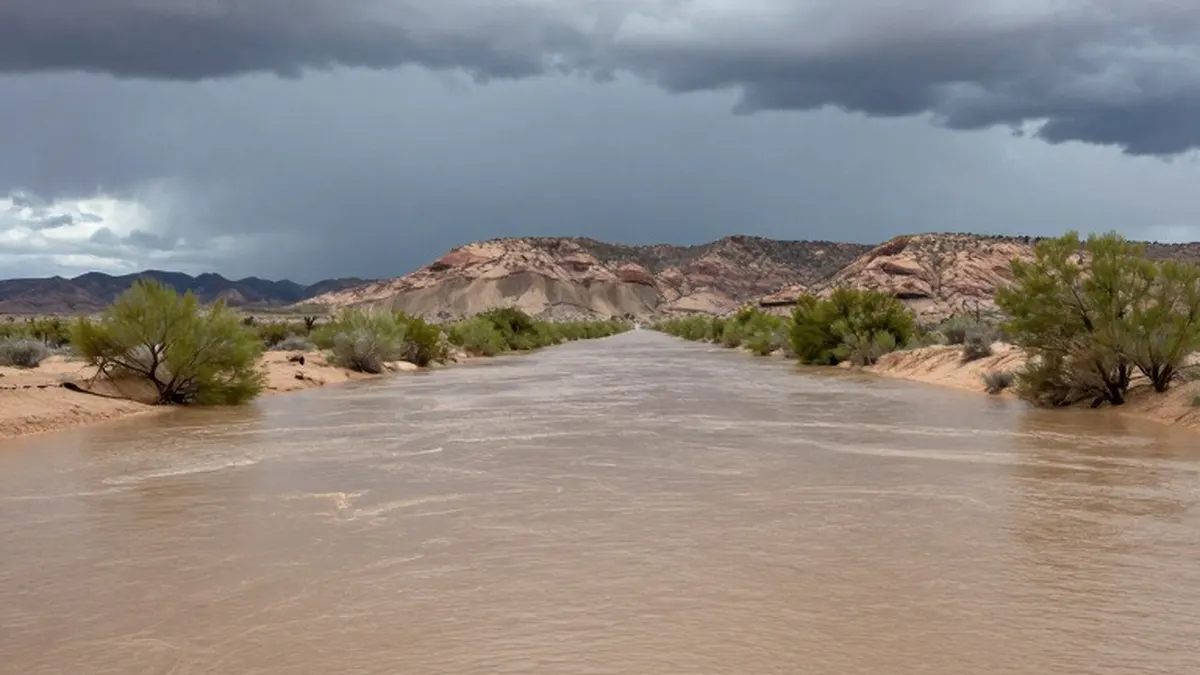
An exceptionally strong El Niño is helping drive heavy rainfall and flooding across the Southwest, scientists say, as a succession of storms brings evacuations and rising rivers. The climate phenomenon is not the sole reason for the severe weather, but experts say it is increasing the likelihood and intensity of downpours across the Southern United States.
Flash flooding on Sunday forced evacuations in northern New Mexico and central Arizona. A Colorado ski town also prepared for its main river to reach potentially catastrophic levels. Those threats followed another wet storm the previous week that brought days of flooding to southwestern states, adding to the region's recent run of severe weather.
More than 20 trillion gallons of water fell across the Four Corners states and Nevada over the past two weeks, according to calculations by Ryan Maue, a former chief scientist at the National Oceanic and Atmospheric Administration. The enormous rainfall totals have accompanied an El Niño that scientists describe as particularly extreme.
El Niño is a natural warming cycle in the Pacific Ocean that occurs irregularly, sometimes every few years. Warmer ocean water releases moisture into the atmosphere, giving passing storms an additional supply of water. This year's event is also redirecting atmospheric winds toward the Southwest, experts say, bringing together conditions that are more favorable for storms.
Daniel Swain, a climate scientist with the University of California Agriculture and Natural Resources, said the interior Southwest typically faces a greater likelihood of substantial precipitation at this time of year. The degree of the current activity, however, goes beyond what scientists have previously seen, he said. Yale Climate Connections meteorologist Jeff Masters also characterized the event as exceptionally powerful.
Human-caused climate change has already raised ocean temperatures over time, and El Niño adds further warming. Randy Cerveny, a meteorologist at Arizona State University, said the warmer starting point compared with roughly a century ago makes El Niño conditions more intense.
The effects extend beyond the United States. Swain said Peru and Ecuador are among the places experiencing record-breaking flooding as the phenomenon alters weather patterns worldwide. The event is expected to reach its peak in December, with its effects potentially continuing for months afterward.
Cerveny said further events of this kind are expected because Pacific heating has not yet peaked. Experts urged residents to follow weather forecasts, make plans in advance and comply with evacuation warnings issued by local authorities.