Flights were allowed to depart again across the United States on Friday night after the Federal Aviation Administration lifted a nationwide ground stop prompted by communications failures at regional air traffic control centers. Transportation Secretary Sean Duffy said airspace had reopened and blamed aging hardware for the disruption. Airlines faced a slower recovery because many aircraft and crews were no longer where they needed to be.
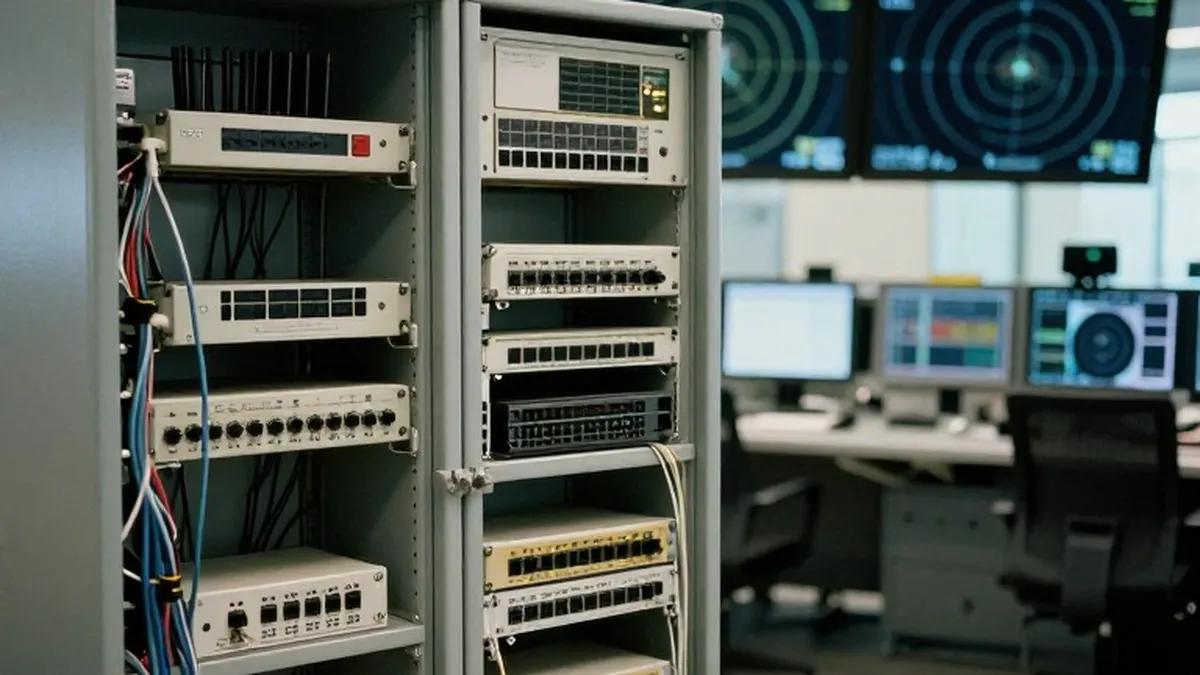
The FAA imposed the halt Friday afternoon, citing extraordinary circumstances. Trump administration officials described systems as outdated and overloaded, while senior officials said the disruption was not caused by a sweeping Microsoft outage. Homeland Security Secretary Markwayne Mullin said introducing new technology into the existing air traffic control system had overwhelmed it. He cautioned that another outage could not be ruled out.
Investigators were still determining the cause. Asked about a possible cyberattack or an incident involving rogue artificial intelligence, Mullin said there were no signs pointing to an attack and that the failure appeared mechanical, although he stopped short of certainty. Officials were also examining whether the FAA's rollout of an artificial intelligence system had any connection. That system sends recommendations to control centers from a single location near Washington, DC.
Aviation analytics company Cirium reported at least 827 diverted flights as of 7:05 pm EST. Of those, 670 returned to their departure airports and 157 went elsewhere. Airports receiving diverted aircraft included Washington Dulles, Los Angeles, Cincinnati/Northern Kentucky and Nashville. About 11,000 flights carrying more than 1.5 million passengers had been scheduled to leave US airports after 4 pm EST, increasing the potential for further cancellations and diversions.
International departures were being considered individually, Mullin said, and some aircraft took off Friday evening. The nationwide halt was the first since a major FAA computer malfunction in January 2023 and the second since the aftermath of the September 11, 2001, attacks. Its effects threatened to disrupt thousands of planned flights through at least late Friday night.
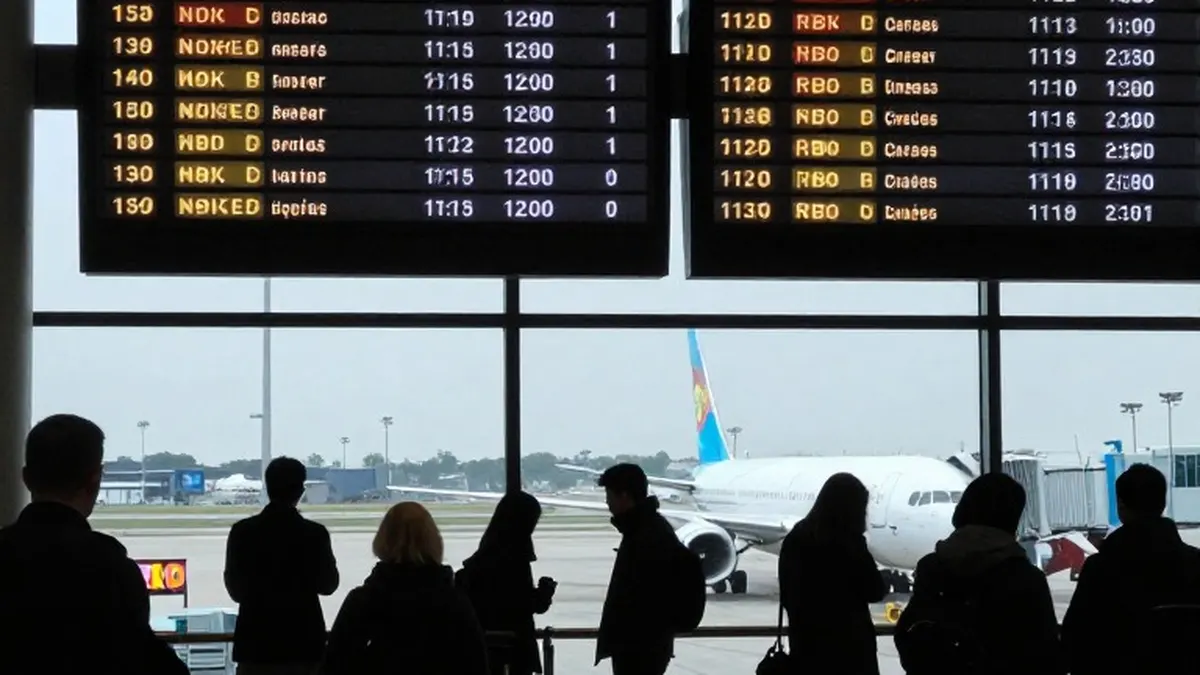
At Chicago O'Hare, passengers discovered widespread delays on airport screens and weighed hotel stays against alternative travel. Amber McQuilkin, a 27-year-old software engineer from Seattle, feared missing a trip with friends to New York for the League of Legends world finals. Austin Curtis and his wife were told to leave their Denver-bound aircraft during a Chicago layover and considered spending the weekend in Chicago instead.
The disruption also stranded NBA, NHL and college teams, while NFL teams faced uncertainty over travel to weekend games. Cargo services were delayed as well. FedEx said it was ready to use contingency plans to limit disruption. According to Airlines for America, US carriers transport about 61,000 tons of goods daily to and from more than 220 countries.
The outage came amid efforts to modernize air traffic control technology. Congress approved $12.5 billion for that work last year, supporting replacement of old copper wiring with fiber optic lines and gradual upgrades to airport radio systems. Duffy has said completing the overhaul will require another $30 billion, which the White House is seeking from Congress.
Aviation safety expert and former United Airlines pilot Steve Arroyo said the failure resembled a September communications outage that disrupted hundreds of flights across the Northeast, but on a national scale. He said keeping aircraft on the ground was necessary when reliable communications could not be assured.