Canada promoted its record on reducing methane emissions at COP31 last week, but experts say unfinished regulations in Alberta undermine its claim to global leadership. The country’s largest oil and gas producer has yet to present updated provincial rules that would deliver reductions equivalent to Ottawa’s strengthened requirements.
At Wednesday’s ministerial meeting in Antalya, Turkey, Canada committed $10 million to support international methane reductions. Canada co-convenes the Global Methane Pledge, a coalition of 159 countries, with the European Union. On Friday, Ottawa also announced a program intended to connect Canadian suppliers of methane-reduction technology with buyers abroad.
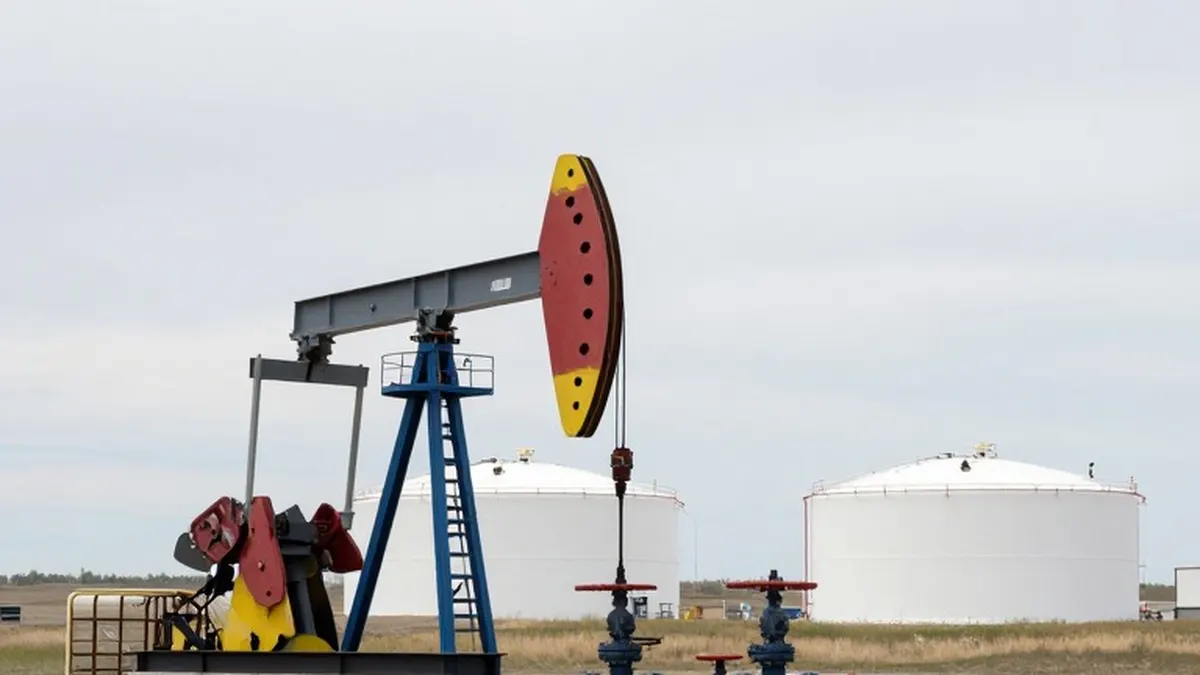
Methane accounts for about a third of the global temperature increase. Although it remains in the atmosphere for less time than carbon dioxide, its warming impact over 20 years is more than 80 times greater. Oil and gas production generates 48 per cent of Canada’s methane emissions. A 2024 study attributed roughly 68 per cent of that sector’s methane emissions to Alberta, compared with 18 per cent to Saskatchewan and seven per cent to British Columbia.
Under the Canadian Environmental Protection Act, provinces can replace federal regulations with their own if they demonstrate equivalent results within the same timeframe. British Columbia roughly halved methane emissions from oil and gas between 2020 and 2023 under such an agreement, reaching its reduction target two years early. However, Alberta, Saskatchewan and British Columbia have not finalized agreements matching federal rules announced in December 2025, which set a pathway toward cutting the sector’s emissions by 75 per cent from 2012 levels by 2030.
Alberta received a different timeline under its memorandum of understanding with Ottawa: a 75 per cent reduction from 2014 levels by 2035. Amanda Bryant, an oil and gas analyst at the Pembina Institute, said postponing reductions increases cumulative emissions and questioned how Alberta’s extension fits the national 2030 goal. Environment and Climate Change Canada did not explain the five-year extension when asked by CBC News. Spokesperson Amy Falkner said equivalency assessments would remain consistent with the act.
An agreement in principle signed in March committed Alberta to preparing a draft for a 60-day public consultation and finalizing the agreement by the end of 2026. As of November 16, the draft had not appeared. With updated federal regulations taking effect in January 2028, experts fear pressure to approve inadequate provincial rules without public input. Falkner said work was continuing. Alberta Environment Minister Grant Hunter did not respond to a request for comment.
Measurement is another unresolved issue. Alberta’s industry-based estimates put its 2023 methane reduction at 52 per cent relative to 2014. Federal calculations, which incorporate aerial measurements and independent research, put it at 35 per cent. The March agreement requires independent third-party verification. Bryant said different emissions baselines would prevent governments from ensuring equivalent outcomes.
Alberta’s existing agreement was designed to reduce emissions by 40 to 45 per cent from 2012 levels by 2025. Its rules also differ from federal requirements on intentional methane venting, leak inspections at high-risk sites and routine flaring. Federal regulations generally prohibit intentional venting and ban routine flaring, while Alberta does not impose those prohibitions.
The international methane push comes amid criticism of broader federal climate rollbacks. Robb Barnes of the Canadian Association of Physicians for the Environment cited the abandoned oil and gas emissions cap, reversals on carbon pricing and changes to the electric vehicle mandate. He suggested methane progress could help Ottawa deflect criticism, while arguing that the federal government must press Alberta during negotiations.